Sunday, 29 September 2013

6 Effective Ways to Avoid Engaging With Quantitative Data in Mental Health

1. Imply that Quantitative Data is Inherently Flawed:


One of the most effective ways to undermine anyone trying to appeal to principles of empirical research is to remind them and everyone else that the whole project of obtaining supposedly "objective" data is doomed to begin with. We all know that all research in psychiatry is hopelessly biased by its connections to Big Pharma, so be sure to muddy the waters and block further discussion by asking profound sounding rhetorical questions like "what research? conducted by whom?" Ignore the fact that questions about prospective bias, methodology and misuse of statistics are already central to the effective interpretation of any research and that some of the most effective ways to guard against them are statistical procedures.

If you don't feel that accusations of an inevitable and pervasive bias are a strong enough slur against the principle of empirical data collection, be sure to make bold assertions to the effect that the whole principle of obtaining quantitative data on people is an act of "violence" on the holistic truth about humanity.


2. Remember that a Focus on Subjective Experience is the Only Worthwhile source of Knowledge:


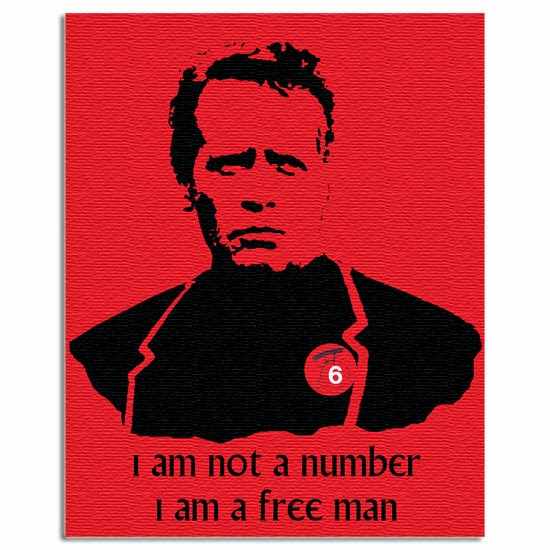
Researchers are supposed to be interested in experience right? So why are they all faffing around with experiments and longitudinal surveys? There are plenty of people around who have actually had experiences and their testimonies should be entirely sufficient. Be sure to remind researchers of this whenever they suggest the spurious use of numbers to try and figure things out.  You are more than just a number!


3. Remind People that You Aren't Interested in the Entity Being Studied:


"Not everything that counts can be counted, and not everything that can be counted counts" Einstein said that didn't he? Or was it Eleanor Roosevelt, or Winston Churchill? It doesn't matter, the principle is sound. Maybe researchers want to pigeonhole people into entirely irrelevant categories and measure things about them, but why should the rest of us give a stuff? They say that they are interested in learning about groups of people who meet a set of agreed upon characteristics, but it is pretty clear this is just a front for the propagation of a sinister medical model. Further proof of this can be seen in the fact that almost no researchers ever mention a strict biological conception of mental illness; they're keeping it under wraps!


4. Accuse Anyone Deploying Empirical Reasoning Of "Scientism":


This one is particularly effective because very few people actually know what it means. Sciencey people all hate religion don't they; so if you accuse them of an irrational faith in the power of science you can win any debate while simultaneously getting on their nerves. Ignore the fact that a belief in the use of the best available empirical evidence is not even close to being scientism proper, anyone who dabbles in science is unlikely to have retained their common sense and will almost certainly be out of touch with reality. If someone has used "Schizophrenia" or "Bipolar Disorder" in their work then they plainly believe these entities to be illnesses just like Hepatitis or diabetes and certainly don't have any curiosity regarding their ontological status. They are no better than mystics or astrologers, and anything they say can be dismissed.


5. Remind People of the Nazis:


Scientists always drift back towards biology and genetics, they can't help themselves. Even if they are only suggesting that genetics and constitutional physiology account for a relatively small proportion of variance in any given problem, there is no telling how long it will take before they drift towards a policy of eugenics and ethnic cleansing. You are only ever doing anyone a favour by reminding them of phrenology, eugenics and--ideally--the Nazis before they walk foolishly out onto this slippery slope.


6. ...Continue to draw on Data when it Suits You:


None of this should leave you feeling that you can't preface your own views with comments to the effect that "it has been shown..." or "data proves..." In fact, now that you have an arsenal of tools to discount any research that doesn't back up your own case, you are free to deploy research of any quality; it cannot be countered by anyone else's!


Thursday, 22 August 2013

At the Limits of Meaning

Here's a neat irony: so often is it said that psychiatric problems are"meaningful" that the statement itself is starting to sound rather meaningless. Used as a rallying cry to focus attention on the content of people's experience rather than viewing its form as a kind of pathology, the "distress is meaningful" idea has become diluted and distorted through careless use. This is a shame as, like most ideas in "critical" psychology and psychiatry, it has a worthwhile core which it is worth staying in contact with.

"Man's Search For Meaning":

Pareidolia: Making Meaning Where None Exists

To say "distress has meaning" can mean the tendency we have to imbue our health problems, like anything we experience, with special significance and form associations to them. In this sense even the most random or the most biologically determined forms of health-problem have "meaning". It is very meaningful to me that I am starting to notice the slow and inevtiable movement of my hairline towards my crown, but this doesn't mean I can halt it by "making sense" of it. More seriously, it is extremely meaningful when people with Alzheimer's start to lose their memory as a result of cortical atrophy, but this is because our grasp on our minds is very significant; it does not mean they are, say, trying to repress something.

The existence of this general sort of meaning making about our lives is uncontroversial and only a rather perverse and callous person would deny it. There is, however, another sense in which distress has been taken to "mean" something, and its conflation with the weaker form above has generated some confusion.


Symptoms as Messages:

Freud was prompted to develop the technique of Psychoanalysis when it began to seem to him that the symptoms of his patients weren't just manifestations of some physical problem ("degeneracy") but were a sort of communication about the contents of their minds.

Conversion Hysteria: Meaning's Search for Expression

Freud and Breuer had noticed that when they encouraged their patients to speak freely--and without the sorts of prohibitions that teenage Viennese girls were normally subject to--their symptoms cleared up (we'll leave for now the question of whether this really took place, and for the reasons they claimed). This led them to conclude that, in some circumstances, the body itself became a channel for communicating the sorts of emotions we normally communicate in speech. Although initially of interest in the case of "conversion hysteria" (a category which has fallen into relative disuse) Freud extended the principle to obsessional behaviour (where obsessions divert the energy created by resisting expressions of desire) and hallucinations (which acted to fulfill a resisted desire).

One result of the Freudian meaning of "meaningful" was that by the middle of the 20th Century, and especially in America, psychoanalysts came to be seen as a cabal of expert decoders, essential to tell us the real underlying meaning of our actions. With the decline of the dominance of this framework there has arisen a new skepticism about what our bodies and minds can ever be said to be telling us about our lives.

Nonetheless this meaning of "meaningful" has its modern counterpart in claims that (for instance) the voices heard in psychosis are expressions of emotions which the hearer has not yet dealt with; that bouts of intense paranoia reflect a feeling of danger which has its root in early experiences. I don't want to deny or defend these claims here, they appear to have their use in some situations and not necessarily in others. Instead, I want to draw attention to the fact that they form a stronger assertion than the more banal observation that everything means something to someone, and that these two can come to be thoughtlessly merged.

Psychoanalysts: The great decoders 

Why does this matter? The weak claim (that everyone's experiences come to have meaning) and the strong claim (that the meanings are central to the phenomena, which can be healed by the right kind of understanding) have different implications for treatment, but to carelessly fudge them allows us to overlook this. If you assert the weak form then you are simply saying we should pay attention to the meaning of people's distress and try to engage with the reasons for it. If you assert the strong form then you are claiming that the right sort of interpretation can essentially dissolve certain forms of distress. This belief can be expected to lead to an anti-medication ethic as people come to see the effects of medication as a violent denial of meaning. Such a belief (which virtually amounts to a superstition) should be kept separate from the very real problem of people being unnecessarily over-medicated and it should also be kept separate from the obvious fact that talking to people about what things mean to them is a kind and helpful thing to do.

Unless we are a bit more rigourous about this separation, it is unclear whether we are saying healthcare professionals should engage with the meaning of people's suffering or whether we are saying that healthcare professionals have a special access to its interpretation. The latter is a rather arrogant claim, promoting dependency on special interpreters with defintive answers, but it can be smuggled in alongside the more benevolent position if we don't look out.

Monday, 29 July 2013

Licensed to Ill?

Most of my posts on this blog attempt to reach some conclusion. Not this one. I haven't managed to come up with a neat propositional statement that does justice to what I think about the topic. This blog-post is about the term "Mental Illness", specifically the "Illness" bit, and more specifically the question "is it appropriate to say 'mental illness' to talk about the sorts of misery that some people experience under the rubric of 'mental health problems'?"

On one view it's an open and shut case: the answer is "No!" Virtually none of the experiences so inadequately described by the DSM can be regarded as "illnesses"; they are "problems" at most, and they are caused not by a brain malfunction, but by life experiences. This view is held by some to be the more sympathetic and humanistic one. Its advocates are fed up with being, or seeing others, fobbed off with a label and some pills. They're fed up with people being written off as "chronic" and with the lowered expectations that lock service users into institutionalised and restricted lives. I largely agree. I have seen how people get treated in hospitals; how badly resourced services warehouse them and are able only to offer paltry shadows of what we would properly call "care". Calling people "ill" can work the neat trick of attributing all that is wrong with a person to the illness, and overlooking the problems caused by the ways they have been treated.

How can we prevent the "illness" debate resembling a plane crash?

Where's the debate then? Why would I even ask whether "illness" is a relevant term when there are so many people (perhaps you are one) for whom it very definitely isn't? Practically I don't generally have to adjudicate over whether people are ill, as a psychologist I am more concerned with understanding and influencing the things that they think. Thought can obviously be influenced by physical pathology but I am not medically qualified to treat that, so you can see how it might be in the professional interest of people like me to limit the use of the word "illness".

Theoretically I used to be convinced by the argument that disease or illness is what we say about problems where there are not only symptoms (unpleasant experiences) present, but also agreed-upon biological events which explain them. This argument is based on a definition sometimes attributed to Rudolph Virchow, who died over 100 years ago but it is arguably only relevant if you think that the criteria by which we decide can have been fixed back then for all eternity. Furthermore, it assumes that we can only say "illness" when we have agreed on the explanation.*

Unfortunately, it's a simple definition which no longer seems adequate for our purposes. What counts as an illness is not only a question of similarity to other things we already call illnesses, but also of how far we choose to extend the use of the word illness. As a clinician rather than a sufferer, I don't feel confident that I can define illness from the outside and the ultimate criteria for helping me to do so don't appear to exist. The dictionary definitions are circular and unhelpful:
Mirriam-Webster: "an unhealthy condition of body or mind"
Oxford: "a disease or period of sickness affecting the body or mind"
Dictionary.com: "unhealthy condition; poor health; indisposition; sickness"
As if to make my point for me, there is an interesting symmetry at work. Activists seek to call some experiences "illnesses" even though there is doubt over whether they meet Virchow's definition. In the case of M.E., for example, sufferers are horrified when doctors suggest that there isn't a biological underpinning that would warrant an "illness" designation. They feel ill, and suggest that we should start from this place in determining the status of the diagnosis.

Meanwhile, in mental health, many first hand accounts describe something so like an illness that it just seems callous or pig-headed for an outsider not to agree. William Stryon describes his experience of depression thus:
“When I was first aware that I had been laid low by the disease, I felt a need, among other things, to register a strong protest against the word "depression"...a true wimp of a word for such a major illness." (Darkness Visible: A Memoir of Madness)
If Stryon seeks any redescription it is toward a more severe, more pathologising language which would honour the experience of being taken over by something that seems quite alien.

Kay Redfield Jamison is very firmly of the view that her Bipolar Disorder is an illness:
“No amount of love can cure madness or unblacken one's dark moods. Love can help, it can make the pain more tolerable, but, always, one is beholden to medication that may or may not always work and may or may not be bearable” (An Unquiet Mind: A Memoir of Moods and Madness)
Elsewhere she acknowledges the unique mixed quality that mental health problems have:
"It is an illness that is biological in its origins, yet one that feels psychological in the experience of it"(An Unquiet Mind: A Memoir of Moods and Madness)
Some people may agree with Jamison and Stryon, others may wonder if they're even on the same planet. I bring them to the table because they seem to be at odds with the first hand experiences so readily appropriated by those who seek to combat the medical model. If, like Boyle, you regard "illness" as something with a clear and agreed definition, you will recruit the service user accounts that flatter your own, and possibly stop hearing those that don't. Given the continued ambiguity in the debate, this seems an unwise maneuvre. Before we make assertions about what is and is not an illness, we need to decide what we want the word to do for us. In the meantime, I consider myself lucky that it isn't my decision to make.


* This paragraph has been corrected, it used to say: "Theoretically I used to be convinced by the argument (made, for example, by Mary Boyle) that disease or illness is what we say about problems where there are not only symptoms (unpleasant experiences) but also signs (biological events which explain them). This argument is based on a definition sometimes attributed to Rudolph Virchow, who died over 100 years ago but it is arguably only relevant if you think that the criteria by which we decide can have been fixed back then for all eternity." Mary Boyle, to whose "Schizophrenia: A Scientific Delusion?" I was referring, does not define signs and symptoms this way. 


Saturday, 20 July 2013

The Strange Case of Lucy Johnstone, Rufus May and the Mental Health Charities.

The Clinical Psychologists Lucy Johnstone and Rufus May have recently criticised mental health charities for their continued use of the word "illness" and diagnostic terms taken from the DSM:


May called out Time to Change on their use of "Mental Illness":


This is not the first occassion for such a debate, Lucy Johnstone and Mind had this exchage earlier in the year:


What are we to make of all this? The blogger and mental health nurse Phil Dore recently called it an "ideological pissing contest" (great phrase that) in a blog post concluding that Johnstone and May (and others) should pick their battles elsewhere. I am entirely sympathetic to this view, but in this post I would like to go a little bit further and ponder if there even is a valid battle to be picked.

The form of Johnstone and May's criticism is that these disorders "don't exist". Both clinicians are motivated by an admirable desire to raise consciousness of the contingent nature of DSM's construction. However, such a simple and categorical statement as "DSM Disorder X does not exist" is complicated by the fact that it has at least three meanings:
  1. The categories of the DSM do not exist in the sense that there is no biological illness process to which they can be said to refer. 
  2. The categories of the DSM do not exist in the sense that there is no emotional/psychological process/phenomenon to which they refer.
  3. The categories of the DSM do not exist in the sense that nobody uses them; service users do not get told they have them; services and interventions are not planned on the basis of them and they are not used to design and conduct clinical research.
I am pretty sure that Johnstone & May do mean to imply statement 1 but do not mean to imply statement 3 (I am unclear how they stand in relation to statement 2; perhaps they would like to comment on this post). The problem is that without clarification they are sending out a confusing message. More importantly, they are not acknowledging the legitimate reason for which the charities continue using the terminology they do.

Service Users and others who seek support & information from a mental health charity might reasonably expect to be able to find out what is known about the problem classification terms that they have heard in use. Whatever we think of those terms, there is a wealth of information available about which groups of problems are and are not amenable to which sorts of support. Off the top of my head:
  • People diagnosed with psychotic-problems should be able (without launching into a literature review) to find out that CBT has limited efficacy, but that research is ongoing and it is available on the NHS if they wish to try it for themselves. There are other psychological interventions being researched which may have better outcomes.
  • People with a diagnosis of Borderline Personality Disorder should be able to find out (without scouring the tedious NICE guidelines) that unless they are have received in-patient DBT, they haven't yet had exposure to one of the most intensive psychological interventions available on the NHS.
  • People with a diagnosis of depression should be able to discover (without having to delve into the enormous "common factors" literature) that a very wide range of psychological therapies have been effective in similar cases and are worth pursuing. If they don't like CBT, they can advocate for an alternative approach. 
Both May and Johnstone invoke the literature on stigma to endorse their claims, but the implications of this literature are not as simple as we might like them to be. First of all, the empirically validated existence of stigma does not change the fact that DSM terms have broad societal currency and organise the provision of mental health services. Second, the literature supports a complex picture of which terms are and are not stigmatising and in what ways. For instance, a recent study suggests the term "mental illness" is no more stigmatisting than "mental health problem" (seemingly refuting May's point). Another finding is that some terms ("Schizophrenia") are stigmatising while others ("Depression") are not.

I say all this not because I seek to "save" the medical model (whatever that even is), but because I seek to complicate the criticisms and defend, on pragmatic grounds, the actions of these charities. Given the present confusion about the ontological nature of mental health problems, all recipients of a diagnosis should certainly be offered the information that there are good reasons to call the classifications into question and a lively debate about whether they are even appropriate. To somehow "ban" DSM terms from the public discourse would not be as helpful a step as it first appears; some people would be delighted, others profoundly alienated. It remains unclear why some service users find diagnoses powerfully explanatory while others reject them altogether. For as long as we are stuck with a muddled mix of languages in which to discuss these issues, the dogmatic promotion of "one true God" (Phil Dore's phrase again) is entirely premature.

Wednesday, 17 July 2013

Making a Straw Man of the DSM

I have now twice made the same mistake in print. In a letter to The Psychologist I said that the DSM entailed assumptions about "medical-genetic underpinnings". In an article for Clinical Psychology Forum, I said that "DSM-5’s authors are erroneously committed to considering them [mental health diagnoses] as ‘brain diseases’".

Neither of these statements is true. Here is how the DSM-5 defines a mental disorder:

"A mental disorder is a syndrome characterized by clinically significant disturbance in an individual's cognition, emotion regulation, or behavior that reflects a dysfunction in the psychological, biological or developmental processes underlying mental functioning. Mental disorders are usually associated with significant distress or disability in social, occupational, or other important activities. An expectable or culturally approved responses to a common stressor or loss, such as the death of a loved one, is not a mental disorder. Socially deviant behavior (e.g., political, religious, or sexual) and conflicts that are primarily between the individual and society are not mental disorders unless the deviance or conflict results from a dysfunction in the individual, as described above."
Further to that, here is how the DSM suggests a clinician should determine the cause of any given "disorder":
"The case formulation for any given patient must involve a careful clinical history and concise summary of the social, psychological, and biological factors that may have contributed to developing a given mental disorder. Hence, it is not sufficient to simply check off the symptoms in the diagnostic criteria to make a mental disorder diagnosis. Although a systematic check for the presence of these criteria as they apply to each patient will assure a more reliable assessment, the relative severity and valence of individual criteria and their contribution to a diagnosis require clinical judgement. The symptoms in our diagnostic criteria are part of the relatively limited repertoire of human emotional responses to internal and external stresses that are generally maintained in a homeostatic balance without a disruption in normal functioning...The ultimate goal of a clinical case formulation is to use the available contextual and diagnostic information in developing a comprehensive treatment plan that is informed by the individual's cultural and social context."

The intention of both of my pieces of writing was to complicate and critique the arguments that get made against diagnosis, so how have I fallen into the cognitive trap of making a straw man? Presumably the answer is that when you spend enough time engaging with a group and absorbing its norms, you develop a sort of false consciousness. So often we hear it said that it is the intention of the DSM to medicalise the field that we can easily start believing it without actually reading the manual. It looks like I might actually be falling prey to the first and second of the three myths I have written about here.

Over-medicalisation is problematic when it represents a needless simplification of reality and stands in the way of our responding effectively to mental health problems. It certainly goes on, and the DSM certainly plays a role in facilitating the process. However, the culturally prevalent idea that any given "disorder" has a single simple cause cannot just be laid at the door of the DSM. If we got rid of the manual we would not see a rapid disappearance of the assumption. Instead, the simplification arises from a complicated network of research findings, news articles, educational experiences, drug promotion and "common sense". When an aspect of our reality is as hard to understand as mental health, we can be expected to latch onto any explanation we can understand. When we dislike the results of this heuristic bias, we can be expected to find a culprit. The DSM is an easy target.

Tuesday, 9 July 2013

Improving Mental Health Care: 3 Myths to Avoid

The Struggle of Good vs. Evil:

No Grey Areas Here

Howard Zinn’s massive book on American history is a gripping account of the ways in which the poor and dispossessed of the country have been oppressed and undermined by the financial interests of the financial and political elite. It has one major flaw; a tendency toward painting those elites as a coherent unit of baddies, explicitly motivated to work against the interests of the common man and actively choosing to do so at every turn. For this it was voted one of the least credible books by a poll on the History News Network. The charge is not that Zinn misrepresents the social consequences of financial injustice, but that he falls into the easy trap of inventing a coherent group of people whose malign intent is the cause of those consequences. In fact history is messier; events are caused by isolated individuals, subject to circumstance and acting in what seem to be their best interests at the time.

People on both sides of the debate about psychiatry persistently fall into the same trap and the Manichean narrative erupts all the time in unexpected ways. Jeffrey Lieberman does it here, drawing an unfortunate parallel between anti-psychiatry (which undoubtedly contains some ill thought through positions) and "racism, sexism and homophobia". His piece contains a reasonable point about the nature of debate over DSM; some people seem opposed to diagnosis and psychiatry as a matter of principle, but he can't resist his own anger at the way psychiatry is being criticised.

As if to make Lieberman's point for him, the psychologist and blogger Phil Hickey maintains a fairly constant stream of angry diatribes at his site Behaviorism and Mental Health. His posts (here's one about Lieberman himself) are characterised by an uncompromising rejection of any argument that gets made in psychiatry's favour, assuming it is necessarily being made cynically. Hickey's position is to start from the premise that psychiatry, drugs and diagnosis can never be a good thing and it is surprisingly influential. In debates with qualified clinical psychologists on Twitter I have been called a "pseudo psychiatrist" (as though that in itself were an insult) and seen genetic research into mental health baldly equated with "Nazism".

There is certainly a corrupting influence of big pharma on psychiatry. For my money this was described rather well in Richard Bentall’s Doctoring The Mind: Psychiatrists are treated to glamourous and all expenses paid international conferences; some people make hundreds of thousands of dollars, calling themselves "educators" to promote these drugs. However, this is not the result of some grand concocted scheme by a unified overarching "Psychiatry", it emerges through the collected actions of more or less well intentioned individuals, many of whom fall prey to cognitive biases and self-deception. There is an evil in such a state of affairs, but unfortunately it does not lie where it would be easiest to see and avert.

The notion of the Sacred:

Beware Sacred Cows!

One consequence of thinking in terms of an almost cosmological good and evil is that some ideas come to be seen as inherently unspeakable; a breach of the sacred (or at the very least, of simple common sense and decency). The result over time is that ideas are received, left unchallenged and assume the level of a received truth. This habit is evident among just as many of those who associate the "medical model" with all that is evil as among those that defend it.

Witness the final sentence of the fourth paragraph in this article by Susan Inman, the author of a book about having a child with mental health problems: "Books linking schizophrenia to capitalism have become bestsellers" she sighs. Inman may very well feel this line of sociological inquiry is a waste of everyone's time, but it is never enough to register it in a taken-for-granted tone of indignation. Why not link Schizophrenia to capitalism? If it turns out to be a crappy idea, explain why and show your workings. 

On the other side, all manner of sacred truths abound; diagnosis is "one of the worst things one human can do to another", "bio-genetic explanations" cause stigma and medical treatments do more harm than good. There are important facts that underlie these positions (diagnosis can cause social harms; certain bio-genetic explanations are overly simple and chemical/brain interventions often have damaging effects) but that they too easily become sacred cows which stop us from hearing evidence which contradicts our position. Become too attached to a position and you are vulnerable to the confirmation bias, our tendency to seek out evidence which affirms a position we have already decided is correct. 

Revolutionary Promise:

The Revolution Will Not be Tranquilised

There is no getting away from the fact that psychiatry and clinical psychology offer little consolation of a complete resolution of the problems they take on. We may talk of “treatments” in our field but any mention of “cures” prompts justifiable cynical laughter from practitioners and service users alike. Mental health problems are sufficiently complex (and involve a sufficient mixture of the bio-psycho and social in their cause) that any suggestion that we have discovered that miraculous silver bullet should be taken with a healthy dose of scepticism.

This fact is regularly rehearsed in relation to new biological treatments; anti-psychotics and anti-depressants are debunked as mere dampeners of experience and the internet genre of neuro-criticism (as exemplified by bloggers Neuroskeptic, Neurobollocks and Neurocritic). It is less often raised in response to the utopian claims of social constructivists. In blithely asserting that “we would halve the amount of emotional distress in this country if we had the more equal, relatively cohesive, less debt-ridden political economics of our European neighbours”, Oliver James all but torpedoed his own case by making it implausible. Any talk of revolutions or "paradigm shifts" in clinical psychology should be met with suspicion, not because revolutions are necessarily unwelcome (although it is true that their dangers are easily overlooked) but because they often represent a promise that is then dismally betrayed.

The best possible response to mental health problems probably doesn't lie just over some ever receding social horizon, it is an ongoing process of improvement and research, integrating more kindness and better understanding into our services. 

Wednesday, 26 June 2013

Accuracy vs. Stigma: Is There a Conflict?

Another day another paper (1) examining the links between stigma and the public understanding of mental health problems. The paper (a series of meta-analyses) concludes that "biogenetic explanations" can exacerbate stigma by increasing people's "pessimism" about the outcome of psychological disorders. On Twitter Keith Laws questioned the implications of the message:


Those who responded to this question on Twitter pointed out correctly that it is "absurd" and morally problematic to ignore or suppress the truth about the cause of mental disorder in favour of the narrative you want to tell. I agree, but these answers don't do justice to the most interesting possible ramifications of the research. In their conclusion to the paper, the authors make it fairly clear that they are not advocating the promotion of inaccurate accounts:
"Mental health professionals should not misinform their clients and the public by withholding information about the biogenetic factors that underpin psychological problems." (emphasis mine)
Unfortunately, the waters muddy somewhat when it comes to describing what they are advocating:
"However, our findings indicate that this must be done with considerable caution. Explanations that invoke biogenetic factors may reduce blame but they may have unfortunate side-effects, and they should not be promoted at the expense of psychosocial explanations, which appear to have more optimistic implications." 
What the second half of this passage sadly misses, in its haste to decry the dominance of "biogentic factors", is that the best explanations of the causes of mental health problems would accurately communicate the complexity of genetic causation. It is this complexity that can easily get lost in public debate and everyday healthcare. Having a genetic predisposition to a particular problem doesn't always mean the same thing in the public imagination as it does in reality.

Biology is one determinant of our thoughts, feelings and behaviour; at the same time we retain some quantity of agency (possibly itself biologically determined, but let's steer clear of that philosophical rabbit hole for now), which we are able to exercise to change them. This capacity is not limitless and it varies with the nature of mental health problems, but it is real. People are changed, to some degree, by how they think of themselves (this is what is meant by Ian Hacking's idea about the "Looping Effects of Human Kinds") and if they weren't, there would be no point in any psychotherapeutic intervention.

We can't know very much from this paper about the nature of the disorders or the explanations that are being studied, but it does raise two possibilities that should be further explored. When people with mental health diagnoses attribute their problems to "bio-genetic causes" they may be 1. failing to do justice to the richness of what this really means and 2. buying into an unwarranted therapeutic pessimism that impacts on prognosis.

I'd be among the first to point out that this sort of research gets hijacked and over-simplified by well-meaning advocacy groups who just want to replace one narrative with another, but the fact remains that what it means for genes to have an impact on behaviour is frequently misunderstood. Highlighting the potential public health ramifications of overly simple, overly certain forms of understanding is an important part of public science communication.

1: Kvaale, E. P., Haslam, N., & Gottdiener, W. H. (2013). The ‘side effects’ of medicalization: A meta-analytic review of how biogenetic explanations affect stigma. Clinical Psychology Review.